

Rain may look clean, but it can leave behind minerals, dust, and residue after it evaporates. Lawn-sprinkler water can be even worse. It often contains calcium, magnesium, and other minerals that dry into visible rings on your windshield, side windows, chrome trim, and paint.
In fall, these spots can seem to come back overnight. Cooler temperatures, longer periods of dampness, fallen leaves, morning dew, and frequent rain all give mineral residue more chances to sit on your vehicle. If the car is parked near a sprinkler, every watering cycle adds another layer.
The good news: fresh spots are much easier to remove before they bond with the surface and begin to etch. Here’s how to handle them with less scrubbing and a simple 60-second process.
Why rain and sprinkler spots keep returning in fall
A water spot forms when water dries and leaves its dissolved minerals behind. Rainwater can pick up airborne dust and pollution before it lands on your vehicle. Sprinkler water travels through pipes and across soil, grass, and pavement, collecting minerals along the way.
The problem gets worse when:
- Your car is parked within a sprinkler’s spray pattern
- Rainwater dries in direct sunlight
- Water sits on the vehicle overnight
- You drive without drying the car after washing
- Your windshield or paint has little surface protection
- Mineral deposits are allowed to build up over several days
A quick rinse may remove loose dirt, but it usually will not dissolve mineral deposits that have already dried onto the surface. That is why the spots appear again after the next rain: the original mineral residue was never fully removed.
What happens if you leave water spots too long?
At first, water spots are usually surface deposits. They may look like white rings, cloudy dots, or a faint film. With early treatment, they can often be dissolved and rinsed away.
Over time, repeated exposure can cause the minerals to bond more tightly to glass, chrome, and paint. Heat and sunlight speed up the process. Eventually, the deposits may begin to etch the surface.
Etching is different from ordinary residue. Instead of sitting on top of the surface, the damage creates tiny areas of dullness or texture. A chemical cleaner may remove the mineral layer, but it cannot always reverse deep etching. At that point, glass polishing, paint correction, or professional detailing may be necessary.
That is why prevention matters. Treat sprinkler and rain spots while they are still deposits, not after they become permanent-looking marks.
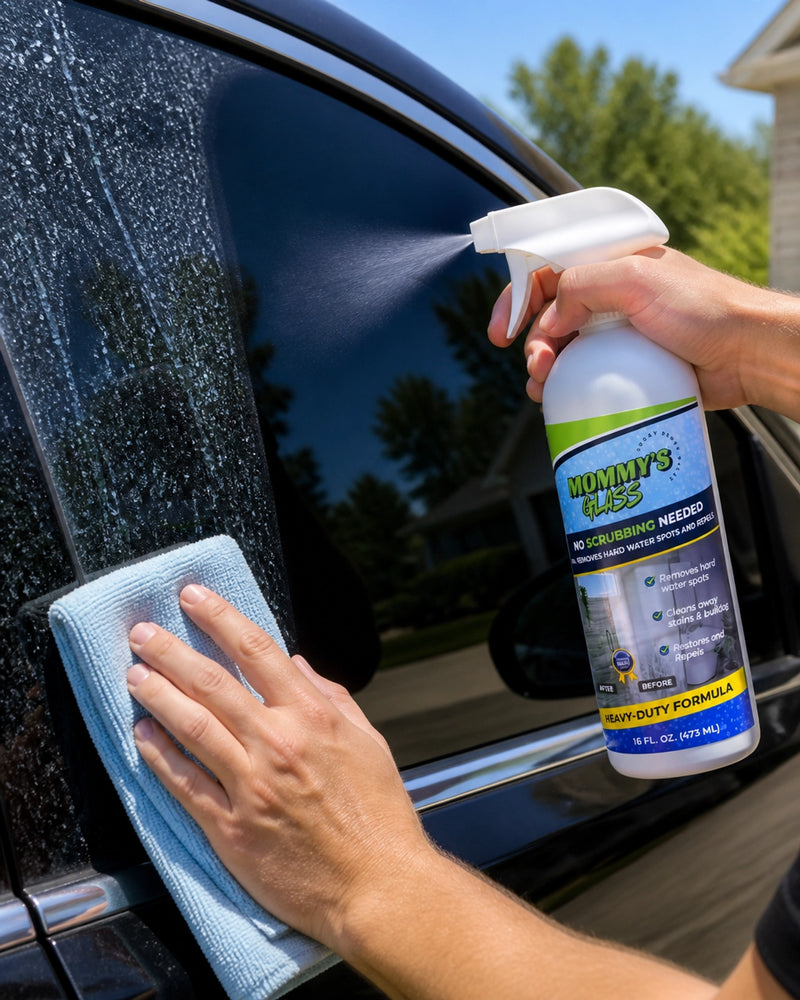
The 60-second spray-wait-rinse method
For fresh or stubborn mineral spots, the goal is to loosen the deposits chemically instead of attacking them with aggressive scrubbing.
Mommy’s Glass 2-in-1 Hard Water Spot Remover & Repellent uses an acid-based formula designed to break down hard water spots, lime scale, rust residue, and mineral buildup. It also leaves behind a protective barrier that helps repel future deposits.
Use this process on cool surfaces in the shade:
1. Rinse or wash away loose dirt
Before treating the spots, remove dust, road film, pollen, and grit. Use clean water or wash the vehicle with a car-safe soap.
This step matters because rubbing a dirty surface can drag grit across the glass or paint. For a vehicle that has been sitting under a sprinkler or tree, a proper wash is better than immediately wiping the dry spots.
Dry the area or allow it to become mostly dry so the remover can contact the mineral deposits directly.
2. Test a small area first
Apply the product to a small, inconspicuous section before treating the entire vehicle. This is especially important when working on older paint, aftermarket finishes, chrome-look trim, wraps, or surfaces you are unsure about.
Do not use the product on aluminum, magnesium, natural stone, or any surface not approved by the product directions. If overspray reaches a sensitive material, wipe it away promptly.
3. Spray the affected area
Wear chemical-resistant gloves and work in a well-ventilated area. Keep the spray at least 17 inches away from your face, and avoid breathing the mist.
Apply Mommy’s Glass evenly to the spotted glass, chrome, trim, or painted section. Work in manageable areas rather than spraying the entire vehicle at once.
4. Wait 30–60 seconds
Let the formula do the heavy lifting. For the full 60-second treatment, keep an eye on the surface and do not allow the product to dry.
The acid-based technology works on the mineral deposits while they are wet. On lighter spots, you may see the residue loosen quickly. Heavier buildup may need a second application or gentle agitation with a soft microfiber cloth.
5. Rinse thoroughly
Rinse the treated area completely with clean water. Do not leave product residue behind, especially around trim, emblems, seams, or rubber seals.
Then wipe the surface dry with a clean microfiber towel. Drying immediately prevents new minerals from being left behind by rinse water.
How to treat each part of the vehicle
Windshield and side windows
Glass often shows rain and sprinkler spots most clearly because the deposits interfere with reflections and visibility. Treat exterior glass in the shade, and avoid applying products to a hot windshield.
After rinsing, inspect the glass from several angles. If the surface is clear but a few marks remain, they may be bonded deposits or early etching rather than ordinary dirt.
For a deeper explanation of mineral buildup and professional removal methods, read The Ultimate Guide: How to Remove Hard Water Stains From Glass Like a Pro.
Chrome trim and brightwork
Chrome trim can develop dull white spotting after repeated exposure to sprinklers. Use a light application and keep the dwell time controlled. Do not allow the product to dry.
A product designed for mineral buildup can be a more practical choice than abrasive household pads. If you are searching for a hard water cleaner for chrome, look for a formula that addresses mineral deposits while giving you clear application and rinsing instructions.
Always test first, especially on chrome-look plastic or plated trim. Not every shiny surface is true chrome.
Painted panels
Water spots on paint can become clear-coat damage if they remain through repeated heat and moisture cycles. Wash the panel first, work in the shade, and treat a small section at a time.
Use light pressure when wiping. The cleaner should dissolve the mineral residue; aggressive scrubbing can create additional micro-marring. Rinse the panel thoroughly and dry it immediately.
If the paint still shows a faint ring after the surface is clean, the mark may be etched into the clear coat. Chemical treatment can remove the deposit, but paint correction may be needed to reduce the remaining defect.

What makes a good water spot remover for cars?
The best water spot remover for cars should match the type of buildup you are dealing with. A basic glass cleaner can remove fingerprints and light film, but it is not necessarily made to dissolve calcium or lime deposits.
For rain and sprinkler spots, look for:
- A formula intended for mineral deposits
- Clear dwell-time instructions
- A rinseable application
- Compatibility guidance for glass, paint, and trim
- A way to help protect the surface after cleaning
- Safety instructions for gloves, ventilation, and sensitive materials
Mommy’s Glass is a professional glass stain remover with multi-surface applications when used as directed. The 16-ounce bottle is designed to cover up to two average showers, and a vehicle can often be treated in sections depending on the amount of buildup.
It is also designed as a hard water repellent for glass, meaning it does more than remove existing residue. The protective barrier helps reduce how easily new water deposits attach and build up.
How to stop sprinkler spots from coming back
Removal is only half the job. A few changes can reduce future buildup:
- Adjust sprinkler heads. Make sure they are not spraying directly onto your parked vehicle.
- Rinse after accidental exposure. If a sprinkler hits your car, rinse the affected areas before the water dries.
- Dry after washing. Use a clean microfiber drying towel or forced air around trim and mirrors.
- Park away from runoff. Water from lawns, driveways, and irrigation systems can carry extra mineral residue.
- Treat spots early. A light deposit is easier to remove than several weeks of layered buildup.
- Maintain your protection. Wax, sealant, or a compatible glass treatment can make future deposits easier to clean.
A protective product will not make your car immune to hard water. It simply gives you more time and makes it harder for mineral residue to bond quickly.
The bottom line
Rain and sprinkler water spots are not just cosmetic. If minerals remain on your car glass, chrome, or paint, repeated moisture and sunlight can turn removable deposits into etched damage.
The most effective routine is simple: wash away grit, work on a cool surface, apply the right cleaner, wait 30–60 seconds, rinse thoroughly, and dry immediately.
For stubborn mineral buildup, shop Mommy’s Glass 2-in-1 Hard Water Spot Remover & Repellent and treat the spots before the next rain or sprinkler cycle turns a small cleanup into a much larger detailing job.


