

White, cloudy buildup on shower doors is usually more than ordinary dirt. It is often limescale: a hard layer of calcium, magnesium, and other minerals left behind when hard water evaporates.
Regular glass cleaner may remove fingerprints and streaks, but it usually cannot dissolve mineral deposits that have bonded to the surface. That is why you can wipe your shower door repeatedly and still see the same spots when the glass dries.
The right lime scale remover for glass uses an acid-based formula to break down the mineral buildup instead of relying on heavy scrubbing. With Mommy’s Glass, the process is simple: spray, wait up to 60 seconds, rinse, and wipe dry.
What Is Limescale on Glass?
Limescale is the chalky white or gray residue left behind by hard water. It commonly appears as:
- White spots or rings
- Cloudy shower glass
- Rough, crusty patches
- Mineral streaks around faucets and showerheads
- A hazy film that returns after regular cleaning
Shower doors are especially vulnerable because they are exposed to water, steam, soap, and minerals every day. When droplets evaporate, the minerals remain on the glass. Over time, several layers can build up and become difficult to remove.
Limescale is closely related to calcium deposits and hard water spots. Whether you search for a calcium deposit remover for shower doors, a hard water spot remover, or a lime scale cleaner, the goal is the same: dissolve the mineral layer so it can be rinsed away.

Why Ordinary Glass Cleaner and Vinegar May Fall Short
Standard glass cleaners are designed for light soil, fingerprints, and surface streaks. They are not usually formulated to dissolve thick mineral deposits.
Vinegar can be helpful for light limescale because it is acidic. However, it is relatively mild and may require extended contact time or repeated applications when the buildup is thick. It also does not provide the same remove-and-repel benefit as a dedicated hard water treatment.
If you have tried sprays, sponges, or DIY methods without success, the issue may not be your technique. You may simply need a stronger formula designed for mineral buildup.
For more detail, read our ultimate guide to removing hard water stains from glass like a pro.
How an Acid-Based Lime Scale Remover Works
Limescale is alkaline mineral buildup. An acid-based cleaner works by reacting with and breaking down those deposits, allowing them to be rinsed from the glass.
Mommy’s Glass uses professional-strength acid-based liquid technology to target:
- Calcium deposits
- Lime scale
- Hard water spots
- Mineral residue
- Rust stains
- Stubborn water buildup
The formula is made for a corrective cleaning job, not necessarily everyday glass maintenance. Instead of scrubbing aggressively for several minutes, you allow the product time to work on the mineral layer.
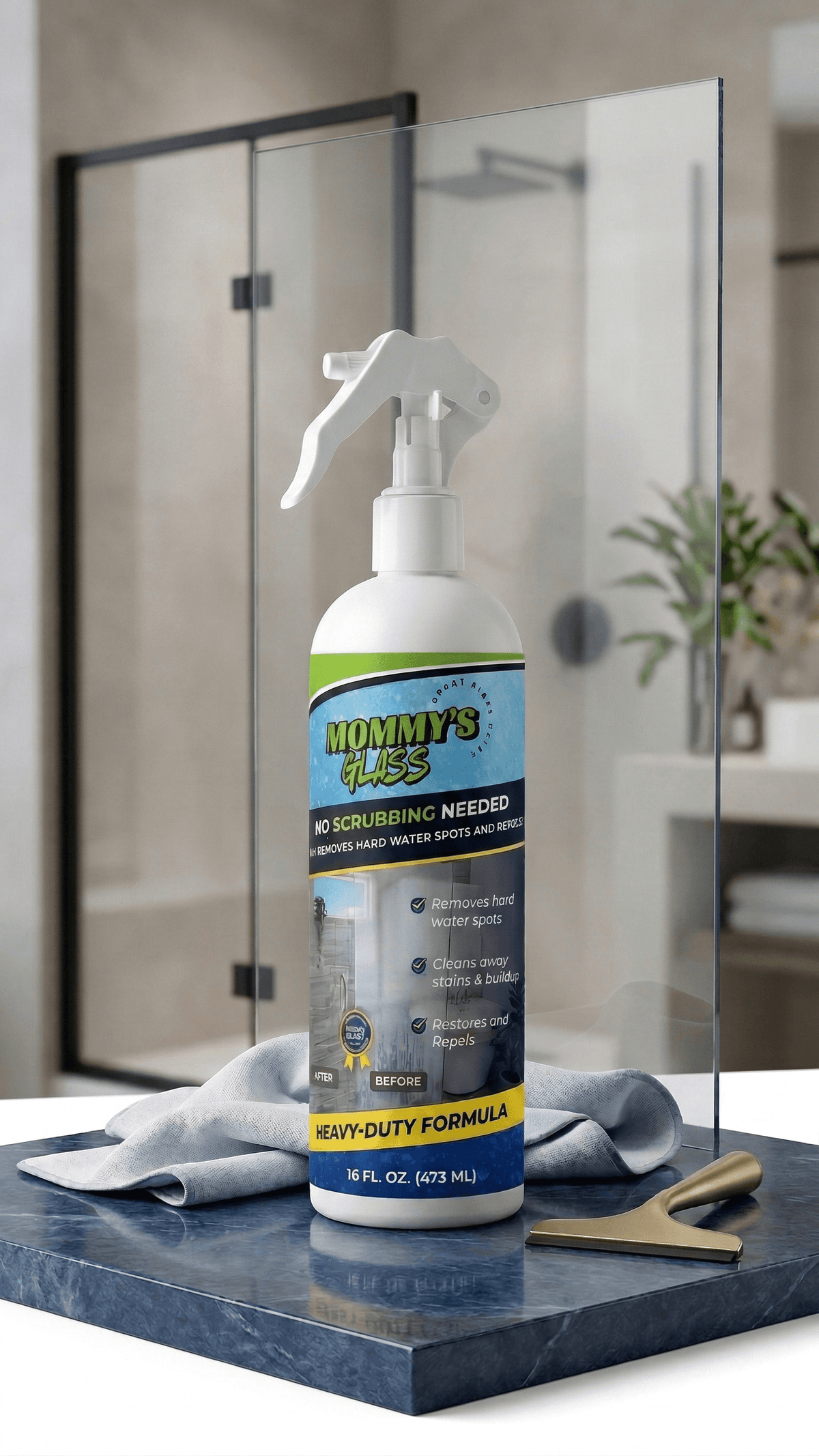
How to Remove Limescale from Shower Doors in 60 Seconds
Before you begin, remove loose dirt and make sure the glass is cool and free of standing water. Then follow these steps.
1. Ventilate the Bathroom and Protect Yourself
Open a window or turn on the bathroom fan. Wear chemical-resistant gloves and avoid breathing in spray mist. Keep the bottle away from your face and eyes, and keep children and pets away from the area.
Never mix an acid-based cleaner with bleach, ammonia, vinegar, or another cleaning product. Use the product by itself and rinse the glass thoroughly afterward.
2. Test a Small Area
Before treating the full shower door, apply a small amount to an inconspicuous section. This is especially important if you are unsure whether the surface is real glass, acrylic, or another material.
Avoid natural stone, aluminum, and magnesium surfaces. If the product contacts aluminum, wipe it off promptly.
3. Spray the Affected Glass
Apply Mommy’s Glass directly to the stained shower glass, working from the top down. Cover the visible hard water spots and mineral buildup evenly.
You do not need to scrub as soon as you apply it. The acid-based formula needs time to penetrate and dissolve the deposits.
4. Wait 30 to 60 Seconds
Allow the product to sit for up to 60 seconds. Do not let it dry on the surface.
For light and moderate buildup, the spray-and-wait step may be enough to loosen the deposits. For especially heavy buildup, a light pass with a non-scratch sponge or microfiber cloth can help remove residue after the product has worked.
The goal is to avoid heavy scrubbing. Let the formula do most of the work.
5. Rinse Thoroughly
Rinse the glass completely with clean water. Make sure no cleaner remains around the edges, hinges, handles, or seals.
Then wipe the surface dry with a clean microfiber cloth or squeegee. Drying the glass helps reveal any remaining spots and prevents fresh water droplets from evaporating on the surface.

What If the Glass Is Still Cloudy?
Some buildup may require a second application, especially if the deposits have been accumulating for months or years. Repeat the process rather than using excessive force.
However, not every cloudy mark is removable mineral buildup. Long-term hard water exposure can sometimes etch the glass, creating microscopic damage in the surface. Etching may look similar to limescale but cannot be removed with an ordinary cleaner.
If the glass still looks cloudy after the mineral residue has been removed, read our guide on why shower glass becomes permanently cloudy and how to tell if it can be restored.
The 2-in-1 Benefit: Remove and Repel
Many cleaners stop working once the residue is rinsed away. Mommy’s Glass is designed to do more.
Its 2-in-1 formula:
- Breaks down existing hard water spots, calcium deposits, and mineral buildup
- Leaves behind a protective barrier that helps repel future water deposits
That barrier does not eliminate the need for routine care, but it can help water bead up and slide away instead of sitting on the glass and drying into new spots.
For best results, use a squeegee or microfiber cloth after showers. You can also follow our practical guide to preventing hard water stains on shower glass with simple daily habits.
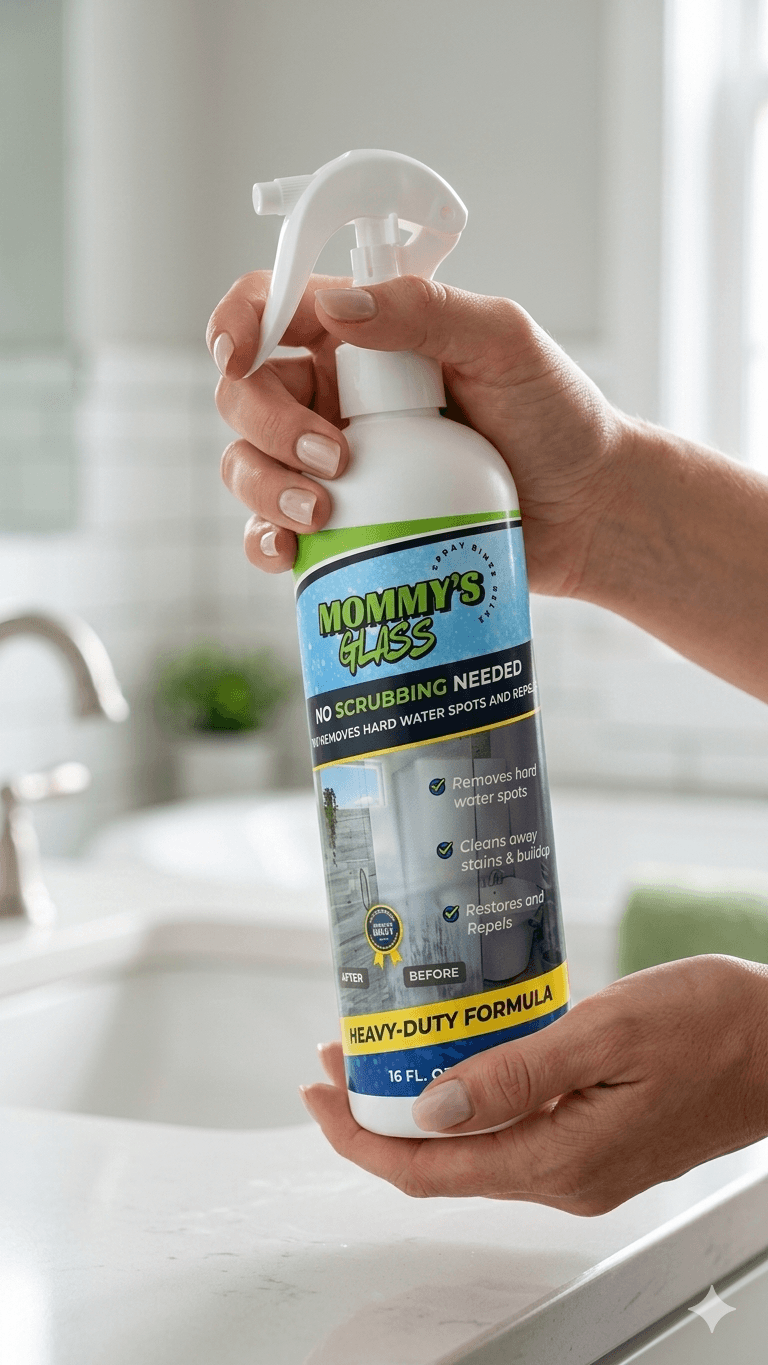
Can You Use It on Windows and Car Glass?
Hard water spots can also appear on household windows, automotive glass, mirrors, chrome, and painted surfaces after sprinkler exposure, rain, or car washing.
Mommy’s Glass is used by homeowners, car enthusiasts, and detailers for stubborn water-related buildup. Always check the product directions, test an inconspicuous area, and keep the surface wet only for the recommended dwell time. Do not use it on natural stone, aluminum, or magnesium, and rinse thoroughly after treatment.
When treating car glass:
- Work in the shade on a cool surface
- Apply the product carefully
- Keep it away from your face and eyes
- Do not allow it to dry
- Rinse completely and dry immediately
For painted surfaces and trim, spot-test first and follow the label directions.
How Much Does One Bottle Cover?
A 16-ounce bottle treats up to 144 square feet, approximately two average shower enclosures. That makes it a practical choice if you need to restore more than one shower or want product available for future hard water buildup.
Mommy’s Glass has been used on more than one million shower doors and has been featured by publications including Good Housekeeping and Better Homes & Gardens. It is also backed by a money-back guarantee, so you can try it without committing to a product that may not work for your buildup.
Stop Scrubbing and Start Dissolving the Buildup
Limescale is not ordinary dirt, and ordinary glass cleaner is often not strong enough to remove it. A professional-strength, acid-based formula can dissolve the mineral layer in a fraction of the time required by repeated scrubbing.
With Mommy’s Glass, the process is straightforward:
- Spray the stained glass
- Wait 30 to 60 seconds
- Rinse thoroughly
- Wipe dry
- Enjoy a cleaner surface with added protection against future spots
Shop Mommy’s Glass 2-in-1 Hard Water Spot Remover & Repellent
Always read and follow the product directions. Wear gloves, ventilate the area, test a small spot first, and never allow the product to dry on the surface.


